Censorship Resistance
Simple Page is built on decentralized infrastructure, but individual gateways, RPC providers, and nodes can still fail or be blocked. This page explains how to route around those failures.
What Can Fail
- An ENS HTTP gateway such as
eth.linkmay be unavailable. - A public Ethereum RPC endpoint may be censored, stale, or down.
- A public Simple Page Node endpoint may be blocked in your region.
- A browser may have trouble loading current content from one provider.
The content itself is addressed by IPFS CID, and the active CID is stored in ENS. You can switch infrastructure without changing the content.
Try Another Gateway
If one ENS gateway is down, try another gateway for the same ENS name:
https://yourname.eth.link
https://yourname.eth.limo
https://yourname.eth.ac
Gateways resolve the same ENS contenthash but are operated independently.
Override The RPC Provider
The Simple Page editor reads and writes Ethereum state through the configured wallet transport and RPC fallback. You can override supported editor RPCs in the URL.
Mainnet example:
https://simplepage.eth.link/?ds-rpc-1=https%3A%2F%2Feth.drpc.org
Sepolia example:
https://new.simplepage.eth.link/?ds-rpc-11155111=https%3A%2F%2Fethereum-sepolia-rpc.publicnode.com
The main editor currently supports RPC override parameters for mainnet (1), Sepolia (11155111), and local development (1337).
Override The Simple Page Node
Simple Page Nodes are discovered through the dservice ENS text record on new.simplepage.eth. If that lookup fails or the listed endpoints are blocked, specify a Node endpoint directly:
https://simplepage.eth.link/?ds-new.simplepage.eth=https%3A%2F%2Fsimplepg.org
Values may omit https://; the app normalizes them.
You can combine RPC and Node overrides in the same URL.
Run Your Own Node
For maximum independence, run your own Simple Page Node and point the editor or CLI at it.
- Browser override:
?ds-new.simplepage.eth=<your-node> - CLI override:
simplepage repo pull --dservice <your-node>orsimplepage drafts list yourname.eth --dservice <your-node>
See Run a Node for setup details.
The Design
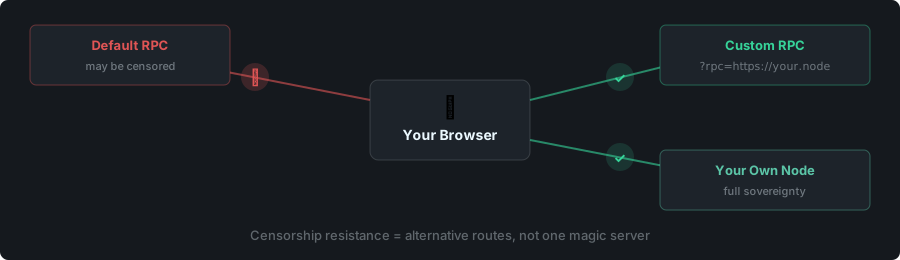
Censorship resistance comes from separating the layers:
- ENS stores the current content pointer.
- Ethereum records who changed that pointer and when.
- IPFS stores immutable content by CID.
- Simple Page Nodes help stage, index, pin, and serve content.
- Gateways make ENS/IPFS content reachable through normal HTTPS.
If one layer's provider is unavailable, use another provider for that layer.